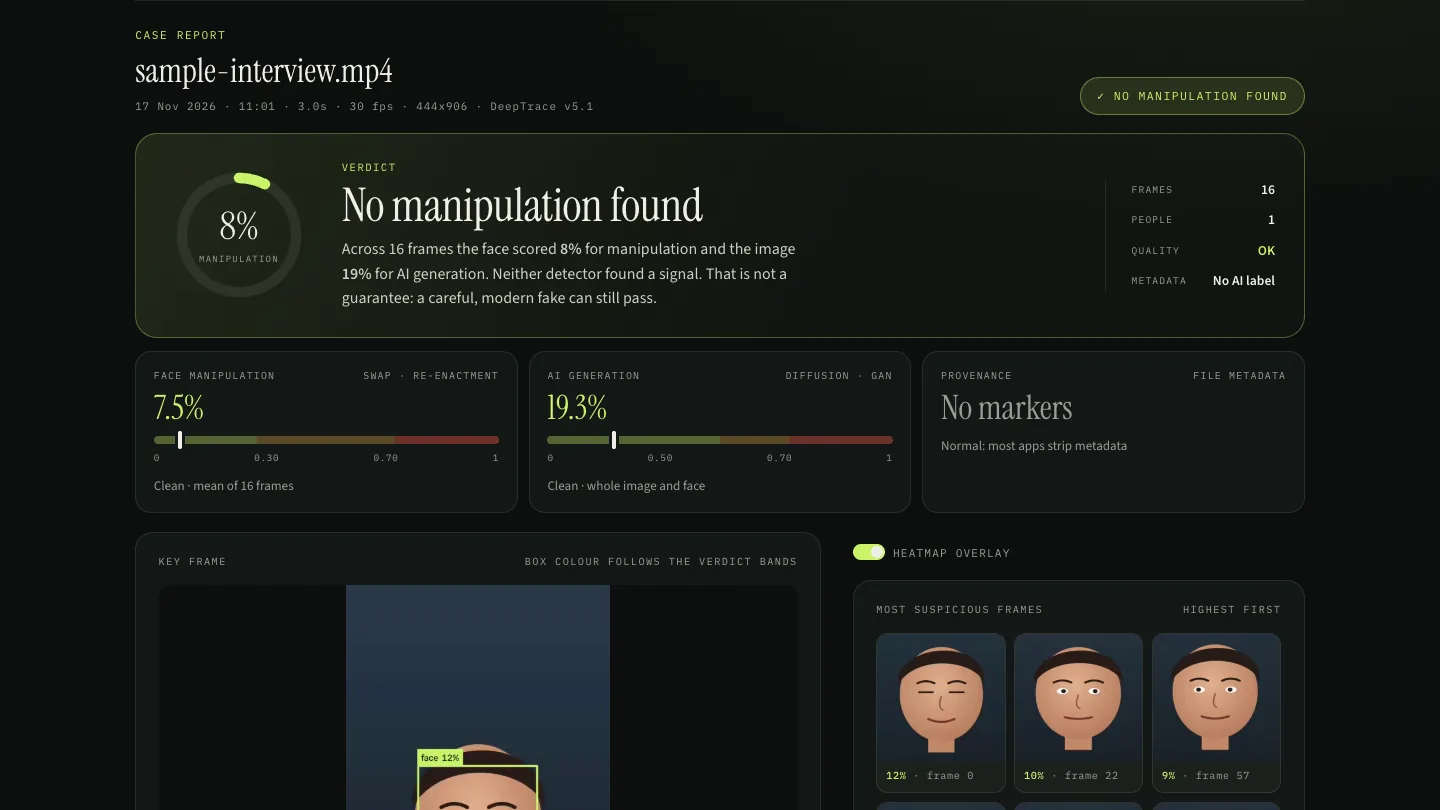
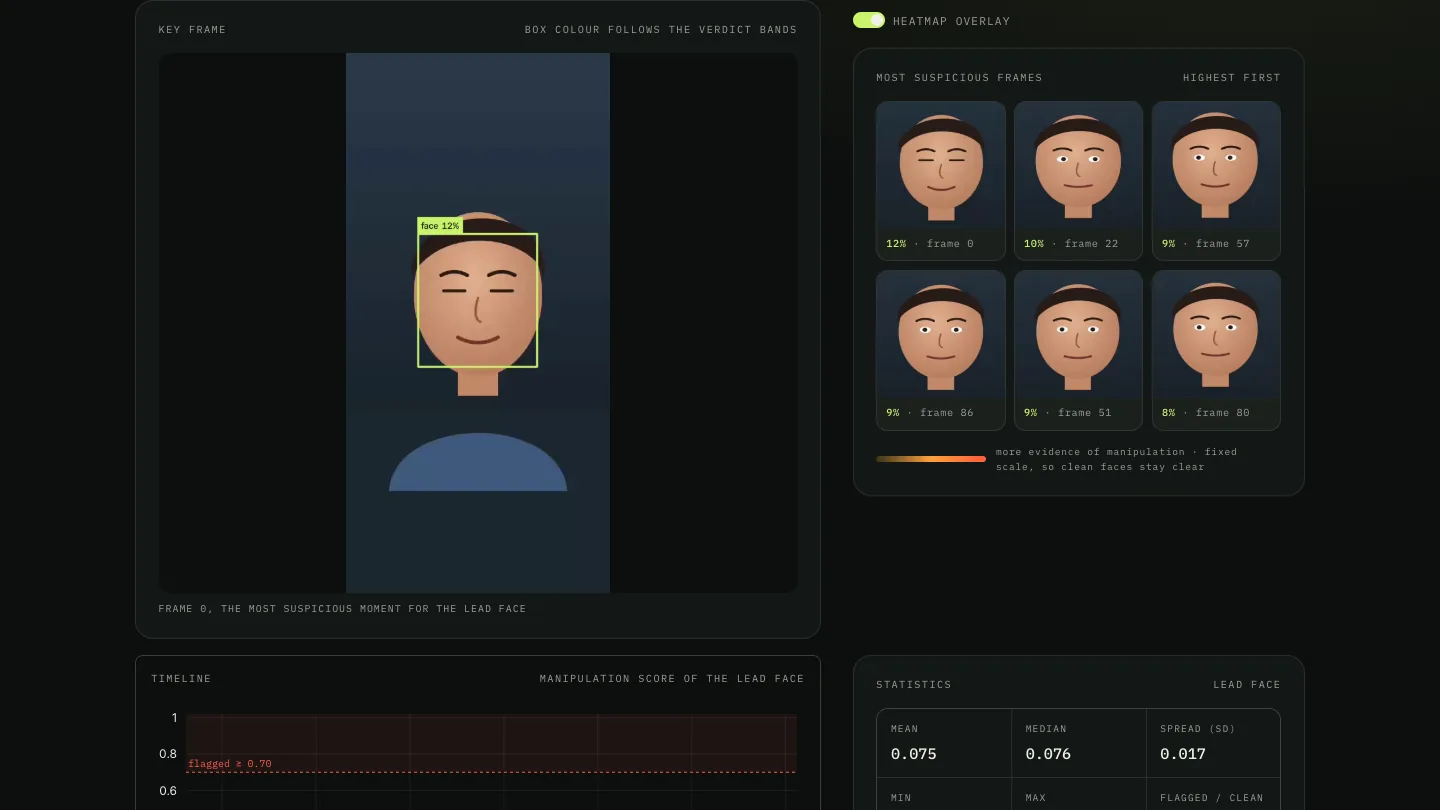
92% fake
The first version I put online looked at a real webcam clip and called it 92% fake. I had built the thing I was worried about: a confident number that anyone could believe.
05 / 12 · AI · Forensics
Exploring how synthetic media can be identified, analyzed and understood.
The first version I put online looked at a real webcam clip and called it 92% fake. I had built the thing I was worried about: a confident number that anyone could believe.
I swapped in two DFDC-winning EfficientNet-B7 models and a Community Forensics ViT, measured it on 163 videos and 205 photos, and taught it to say inconclusive instead of guessing. It still wrongly flags 2 of 88 real videos, and this page says so.
That raised a question code could not answer: who acts on a probabilistic verdict, and on whose authority? It became forty days of research in Malaysia and Singapore, and an essay.
The models now also run on a Mac or iPad, converted to Core ML, so a photo never has to leave the device to be checked.
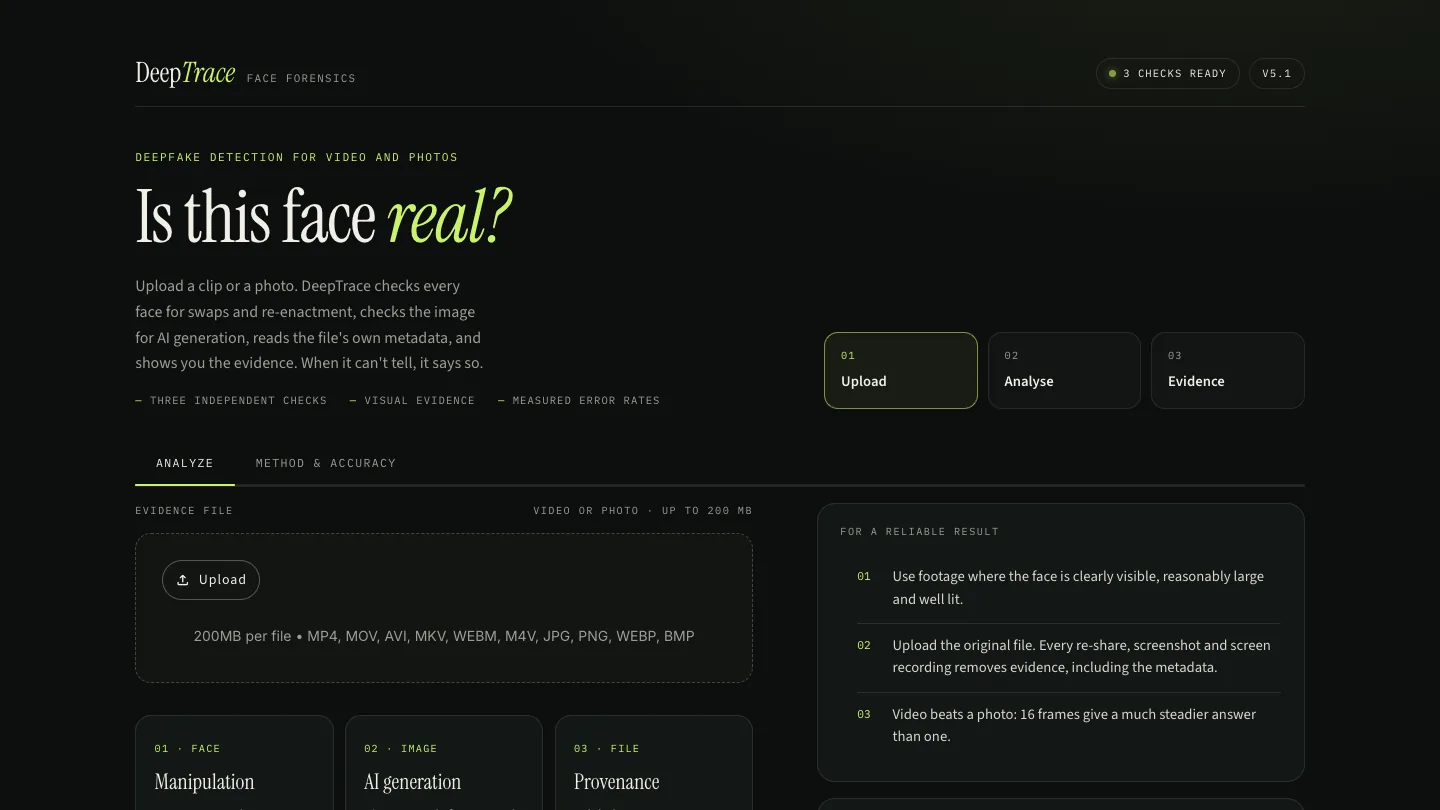
The detector was the starting point. It raised a question I could not answer with code: who acts on a probabilistic verdict, and on whose authority? That question became the comparative governance research further down this page.